
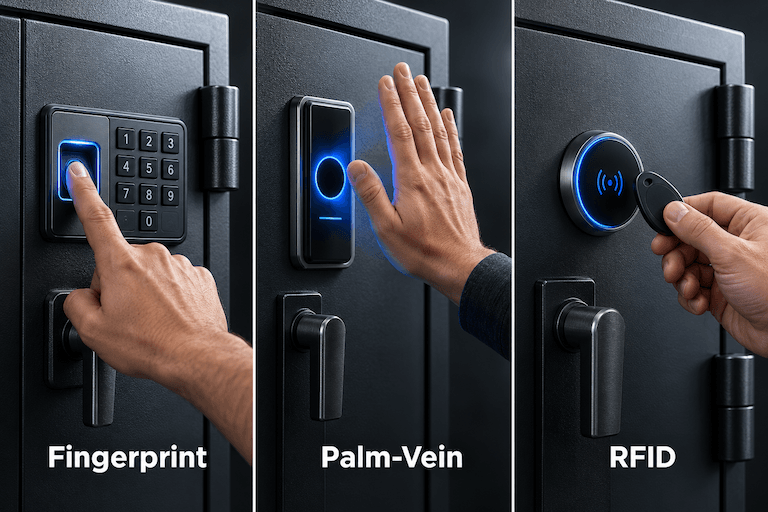
Fingerprint vs. Palm-Vein vs. RFID Gun Safes

A safe’s access system determines how you unlock it. Choosing one also means considering enrollment, backup entry, power requirements and who can use each credential. Start with the exact model and its documentation rather than assuming one technology makes every safe more secure.
How the Three Access Methods Differ
| Access Method | What You Present | What to Check |
|---|---|---|
| Fingerprint | An enrolled finger | Enrollment instructions, recognition consistency, backup access and recall status |
| Palm-vein | Your palm for a vein-pattern scan | Positioning, data storage, user limits and evidence supporting performance claims |
| RFID | A programmed tag, fob or other supported credential | Credential security, lost-tag removal and backup entry |
Fingerprint Safes: Evaluate the Complete Product
Fingerprint access can be convenient, but biometric recognition is not a guarantee against unauthorized entry. CPSC has issued recalls and warnings involving specific biometric gun safes. Check the exact brand, model and serial number against current notices before buying or continuing to use an affected product. Follow the remedy instructions for that particular model. (1)
Ask how enrollment is confirmed, how users are removed and what happens if a recognized user cannot open the safe. Keep backup credentials secure and separate from access by unauthorized people.
Palm-Vein Safes: A Different Biometric Approach
Hornady introduced VEXIS in September 2026. According to the manufacturer, it uses near-infrared technology to recognize vein patterns beneath the palm, stores biometric data locally and supports up to ten users. The announced products include keypad and mechanical-key backup. (2)
Those specifications do not establish that palm-vein access is universally more secure than fingerprint access. Before choosing a model, ask for independent testing, warranty details and clear operating instructions. Confirm that any upgrade kit is compatible with your exact safe and lock configuration.
RFID Safes: Access Through a Programmed Credential
RFID is not biometric authentication. A compatible reader recognizes a programmed credential, such as a tag or fob. Hornady’s RAPiD Safe Keypad Vault, for example, offers RFID entry, a keypad and a mechanical backup key. (3)
Plan where credentials will be kept and how a lost credential will be removed. A convenient access token still needs to be protected from unauthorized use.
Questions to Ask Before Buying
- How many users or credentials can the exact model store?
- What happens when the batteries are depleted?
- How do you remove a user or lost credential?
- Where is biometric information stored?
- Which independent certifications apply to the complete safe and its lock?
- Are mounting hardware, installation instructions and replacement support available?
Choose the Safe as Well as the Lock
Compare usable dimensions, construction, mounting options and any documented fire or burglary ratings alongside the access method. Ask for the certificate or test report supporting the specific protection you need.
For a broader comparison, read our guide to safe lock types. To compare storage options, browse our home safes or gun safes here at Guardian Safe and Vault.