-
Hollon Safe
Model: HDS-500E
Hollon HDS-500E Data Safe w/ Electronic Lock
Fire Rating: 1 HourSize: 19.75" x 13.75" x 16.75"$716.00 -
Hollon Safe
Model: HDS-750C
Hollon HDS-750C Data Safe w/ Dial Lock
Fire Rating: 1 HourSize: 29.5" H x 20.75" W x 20" D$1,200.00 -
Hollon Safe
Model: HDS-750E
Hollon HDS-750E Data Safe w/ Electronic Lock
Fire Rating: 1 HourSize: 29.5" H x 20.75" W x 20" D$1,300.00 -
Hollon Safe
Model: HDS-1000C
Hollon HDS-1000C Data Safe w/ Dial Lock
Fire Rating: 1 HourSize: 36.5" H x 23.63" W x 21" D$1,770.00 -
Hollon Safe
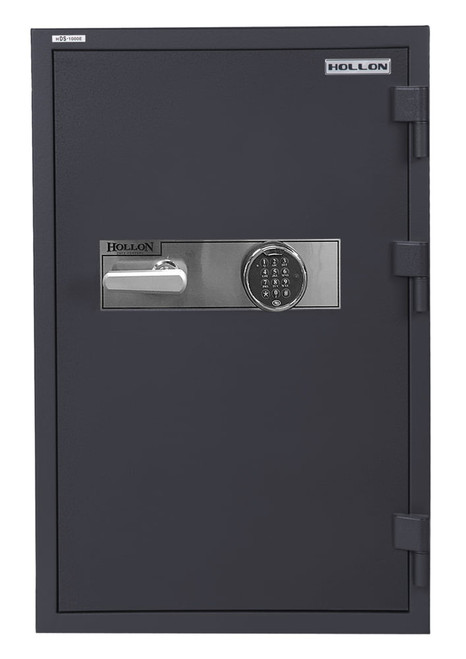
Model: HDS-1000E
Hollon HDS-1000E Data Safe w/ Electronic Lock
Fire Rating: 1 HourSize: 36 1/2" H x 23 5/8" W x 21" D$1,893.00


Why Choose a Data Safe Instead of a Document Safe?
Choose a data safe when the contents need protection specifically intended for electronic or magnetic media. A fire rating for paper documents does not by itself establish suitability for backup tapes, removable drives, discs, or other storage media.
Gardall makes this distinction in its data-media safe specifications. Start with the exact media you need to store, then check that the safe's documented protection covers it. Do not assume every model in a data safe category protects every format under identical conditions.
Which Data Safe Specifications Matter Most?
The key data safe specifications are supported media types, the fire-test standard or certification, test duration and permitted internal temperature and humidity where specified. Ask for the manufacturer's documentation if a listing gives only a broad fireproof claim.
Water protection, burglary resistance, and fire protection are separate considerations. Confirm each feature that matters to your storage plan, including the conditions under which any water-resistance claim applies. A locking door alone does not establish a tested burglary rating.
How Much Media Will Fit in a Data Safe?
A data safe’s media capacity depends on its usable interior, shelf spacing and door opening relative to the size of your drives, cartridges and protective cases. Decide whether you will store media upright, in trays, or in labeled containers.
Include the full backup rotation in your capacity calculation. A safe that accommodates today's set may not hold the retained weekly or monthly sets your organization also needs. Leave room to identify and retrieve individual items without disturbing the rest.
How Should a Data Safe Fit Your Backup Routine?
A data safe fits a backup routine by providing a designated storage location with assigned access, a return procedure and clearly labeled media sets. Assign responsibility for returning each media set after use. Follow the manufacturer's closing procedure so all required doors and seals are properly engaged.
A physical safe is one part of a data-protection plan. It does not create backups, verify that files can be restored, or provide protection for copies stored elsewhere. Keep your recovery process and physical storage arrangements aligned.
What Should You Confirm Before Installing a Data Safe?
Before installing a data safe, confirm the manufacturer’s placement and anchoring requirements, the safe’s weight and exterior dimensions, delivery access and door clearance. Do not drill additional holes or modify the safe without approval, because the enclosure is part of its protective design.
Compare the data safes above, or contact our team with the media types, case dimensions, and quantity you need to store. For paper-record storage, also review our fire-resistant safe selection.