Best Safes for Gold and Silver Collectors in 2026
Table of Contents
- What This Guide Covers
- Why Precious Metals Need a Properly Rated Safe
- First Principle: Concealment Beats Confrontation
- Burglary Ratings Explained
- Fire Ratings Explained
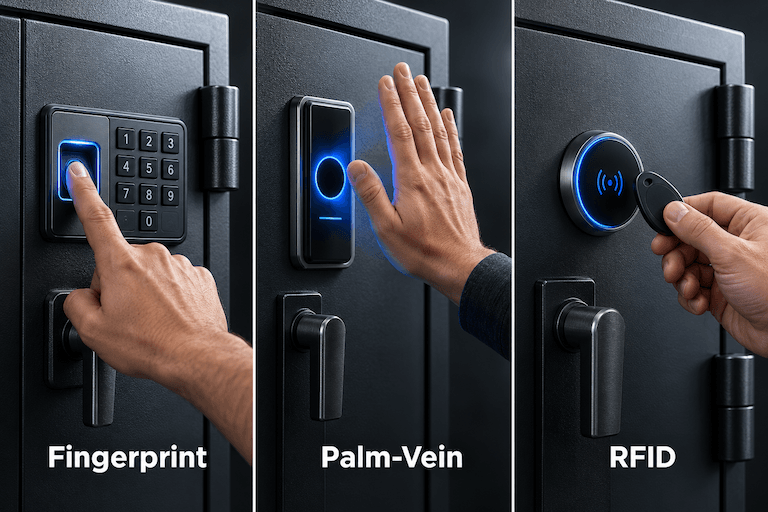
- Lock Types: Electronic, Mechanical Dial, or Biometric
- Best Overall: Hollon MJ-1014E (TL-30)
- Premium Step-Up: AMSEC CF Series (TL-30)
- Best TL-15 Options for Smaller Holdings
- Floor Safes: My Favorite Concealment Play
- Can a Gun Safe Be Used for Gold and Silver?
- Weight, Anchoring, and Placement
- The Hidden Threat: Humidity
- Insurance: The Other Half of Protection
- Final Buying Checklist
- The Bottom Line
Storing precious metals at home is not the same as locking up a few documents or a couple of firearms. Gold and silver are dense, compact, and almost untraceable once stolen, which makes them the single most attractive target inside a home for a determined burglar. Pick the wrong safe and you are not protecting your holdings, you are gift-wrapping them.
Quick answer
Under $30,000? A B-Rate floor safe in concrete (Gardall G-G700 from $562.50, Hollon B1500 from $598). No slab? Step up to a UL TL-15 (Hollon PM-1014E $1,720).
$30,000 to $100,000? UL TL-15. The Hollon PM-1014E ($1,720) for value, the AMSEC CEV1814 ($2,621.25) for US manufacturing.
$100,000 to $250,000? UL TL-30. The Hollon MJ-1014E ($2,141) is the value pick; the AMSEC CF1814 ($4,380) is the premium step-up.
Above $250,000? TL-30X6 or vault-grade construction, or likely a combination of at-home storage and domestic or overseas private vaults.
Combined firearms and metals? The AMSEC BFII series starting at the BFII6024 ($7,710). Worth noting: the BFII is a step below TL-15 in burglary rating and costs more than every TL-15 and most TL-30 safes. Only the right answer when firearms are the primary asset.
Full reasoning, model details, and ratings explained below.
What This Guide Covers
- Why precious metals need a properly rated safe (theft, fire, and insurance considerations)
- Burglary and fire ratings explained in plain English, with the construction differences that actually matter
- Specific safe recommendations at every collection value, with what you are getting and what you are not
- The gun safe question: when the BFII makes sense and when it doesn't
- Floor safe versus stand-up safe trade-offs
- Weight, anchoring, placement, humidity, and insurance considerations that apply to any safe you buy
Why Precious Metals Need a Properly Rated Safe
In short: Two threats matter for metals storage (theft and fire), they are measured by completely separate standards, and insurance is the third factor most owners overlook. A safe that handles one well does not necessarily handle the others.
On the theft side, property crime trends in the US are tracked by the FBI Crime Data Explorer, which still reports hundreds of thousands of residential burglaries per year despite a long-term decline. The average burglar spends only minutes inside a home and goes straight for compact, high-value items, which is exactly what gold and silver are. Recovery rates for stolen precious metals are low, and once melted down they are effectively untraceable. In practical terms, theft is permanent.
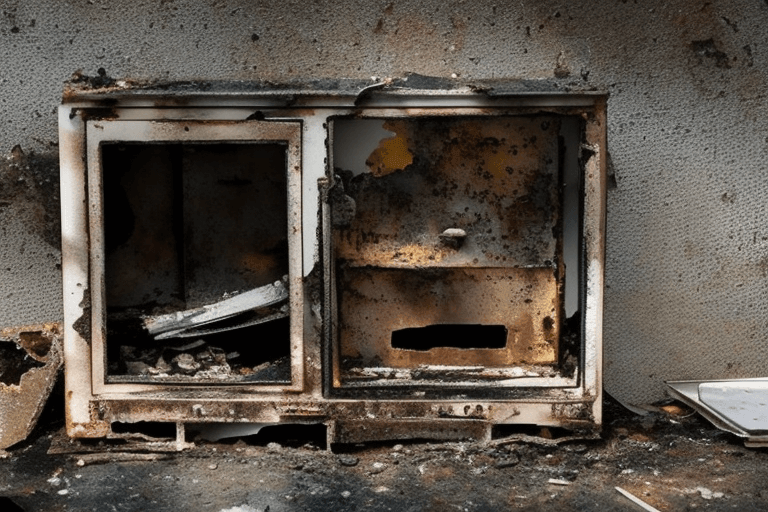
On the fire side, pure gold melts at 1,947°F and silver at 1,763°F, both well above the temperatures reached in a typical house fire. But that is not the relevant number for collectors. Graded coin slabs deform at much lower temperatures, paper certificates and provenance documents burn, and toning damage to bright surfaces can occur long before any metal is at risk. A properly rated safe keeps interior temperatures below 350°F, which preserves the numismatic premium, not just the melt value.
Insurance is the third factor most people overlook. Standard homeowners policies typically cap precious metals coverage at around $200 per loss event unless you schedule a separate endorsement, and many insurers require a UL-rated safe before they will extend meaningful coverage. A TL-rated safe with a monitored alarm system can support scheduled coverage well into six figures.
First Principle: Concealment Beats Confrontation
In short: Concealment multiplies the effectiveness of whatever rating you buy. Buy the rating you need, then make the safe as hard to find as possible.
The best safe in your home is the one a burglar never finds. A thief who walks into a bedroom and sees a 1,000-pound stand-up safe knows exactly what to attack and roughly what is inside it. The safe becomes the target. A thief who walks across a rug covering a floor safe poured into the concrete slab usually walks right over the asset and out the door. This is why my favorite high-security setup for gold and silver, particularly at moderate collection values, is a B-rated floor safe installed in concrete with the door sitting flush.
Even with a stand-up safe, where you put it matters. An interior closet with the safe behind hanging clothes is better than a den where it is the focal point of the room. A basement corner with a tarp tossed over the safe is better than a bedroom where it is visible from the doorway.
Burglary Ratings Explained
In short: Burglary ratings are the single most important specification for precious metals. UL TL-15 or TL-30 is the right tier for most home collectors. RSC (gun safe) ratings are a fundamentally different and weaker standard.
Burglary ratings tell you how long a safe is expected to resist a determined attack. They come from Underwriters Laboratories (UL), an independent testing lab whose certifications are recognized by both the safe industry and the insurance industry. UL testers receive the safe's blueprints in advance, may take an identical unit apart to study its weak points, and then attack the safe with professional tools and trained safecrackers. The clock only runs while tools are actively in contact with the safe; tool changes and pauses don't count. A safe rated for 15 minutes of "net working time" can realistically delay a real-world burglar far longer.
RSC Versus TL Versus B-Rate: A Fundamental Construction Difference
This is the single most important distinction in safe shopping, and the one most marketing copy glosses over.
Residential Security Container (RSC) is the rating most "gun safes" and home safes carry. UL RSC Level I tests one technician with simple hand tools (a hammer, screwdriver, and basic pry bars) for 5 minutes against the door only. UL RSC Level II is a newer, tougher test: two technicians, 10 minutes, with a broader toolset that overlaps with what is used in TL testing. The RSC tests are useful benchmarks for residential deterrence, but they are not designed to simulate a professional attack.
TL-rated safes are tested to a fundamentally higher standard. TL-15 means the safe resisted 15 minutes of attack by skilled testers using power saws, carbide drills, grinders, and pressure tools. TL-30 doubles that to 30 minutes. To even qualify for a TL rating under UL 687, a safe must have at least 1 inch of steel in the body walls and use composite construction with high-density concrete. TL-rated safes that weigh under 750 pounds must be anchored to a structural floor as a condition of the rating. A typical RSC gun safe is built from 11 to 14-gauge sheet metal, which is roughly an eighth of an inch at the thickest. The difference is structural, not cosmetic.
B-Rate is an older insurance-industry construction standard rather than a UL attack-time rating. To qualify as B-Rate, a safe needs at least 1/2-inch of solid steel in the door and 1/4-inch in the body. There is no specified attack-time test, but B-Rate construction is genuinely tough, and when you combine B-Rate steel with concrete embedment (the way floor safes are installed), you get a setup that is extremely difficult to defeat without industrial equipment.
The Full UL Burglary Rating Hierarchy
| Rating | Attack Time | Attack Surface | Insurable Coverage (rule of thumb, no alarm / with alarm) |
|---|---|---|---|
| RSC Level I | 5 minutes | Door only, household tools | Up to $15,000 / $30,000 |
| RSC Level II | 10 minutes | Door only, expanded toolset | Up to $30,000 / $60,000 |
| TL-15 | 15 minutes | Door / front face, power tools | Up to $100,000 / $200,000 |
| TL-30 | 30 minutes | Door / front face, power tools | Up to $195,000 / $375,000 |
| TL-30X6 | 30 minutes | All six sides, power tools | Up to $275,000 / $500,000 |
| TRTL-30X6 | 30 minutes | All six sides, tools and torch | $500,000+ / $1,000,000+ |
The "X6" suffix on TL-30X6 means all six sides of the safe were tested to the same standard as the door. On a standard TL-15 or TL-30 safe, only the door and front face must pass the burglary test. The "TR" prefix on TRTL ratings adds an oxyacetylene torch attack to the testing protocol. For most home collectors, TL-15 or TL-30 is the right tier; six-sided and torch-resistant ratings are for vault-grade installations.
Matching Your Rating to Your Collection Value
| Collection Value | Minimum Burglary Rating | My Recommendations (metals-only) |
|---|---|---|
| Up to $30,000 | B-Rate (in concrete) or TL-15 | Hollon or Gardall B-Rate floor safe set in concrete; otherwise step up to a TL-15 |
| $30,000 to $100,000 | TL-15 | Hollon PM-1014E, AMSEC CEV1814 |
| $100,000 to $250,000 | TL-30 | Hollon MJ-1014E (value pick), AMSEC C1814 (premium) |
| $250,000+ | TL-30X6 or higher | Contact me for vault-grade recommendations |
Collectors often underestimate the total value of their holdings by anchoring on spot prices. Numismatic premiums, replacement costs at retail, and irreplaceable provenance documentation push the real number significantly higher. Gold has also been trending upward, so factor in a few years of potential appreciation when choosing your rating tier. Buying one safe up from where you sit today is rarely wasted money.
Important note on the table above: this table is for metals-only protection. If you also have firearms to store and prefer a single safe, the AMSEC BFII series is the option to consider, but it is a step down in burglary rating (UL RSC Level II) compared to the TL-rated safes at every tier above $30,000, and it costs more than every TL-15 and most TL-30 safes on this list. The BFII makes sense for combined gun-and-metals use; it is not a value play for metals-only protection. I cover this in detail in the gun safe section later in the guide.
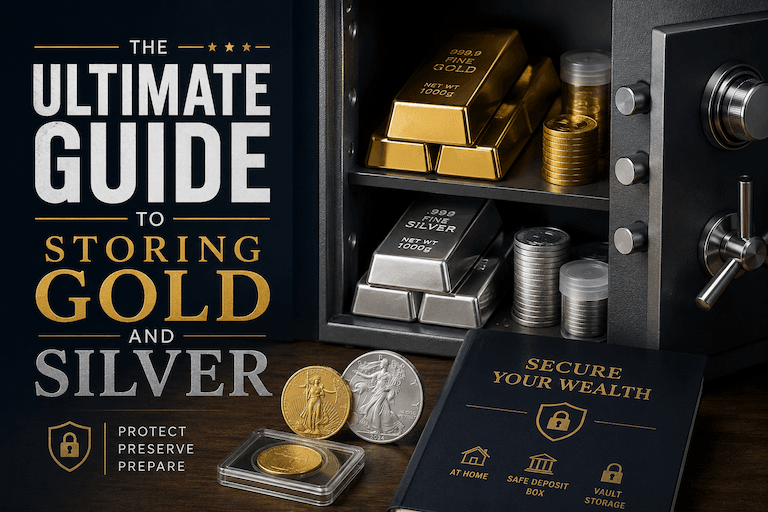
Related: The Ultimate Guide to Storing Gold and Silver Coins and Bullion
Fire Ratings Explained
In short: UL or ETL Class 350 at 1 hour minimum, 2 hours preferred. Factory-only fire ratings (no independent certification) require a leap of faith.
Fire ratings are measured separately from burglary ratings and use a completely different test. The relevant standard is UL 72, which places the safe in a furnace ramped to between 1,550°F and 1,850°F, depending on the rating class. The duration of the test (1 hour, 2 hours, etc.) is set by the rating, and the safe passes if interior temperatures stay below the threshold for that protection class for the full duration. For a detailed reference on UL fire ratings and how each class is tested, see our fire ratings explained guide.
| Protection Class | Max Interior Temp | Protects |
|---|---|---|
| Class 350 (paper) | 350°F | Paper, coin slabs, documents, cash |
| Class 150 (media) | 150°F | Optical media, microfiche |
| Class 125 (digital) | 125°F | Hard drives, USB drives, digital storage |
For precious metals storage, Class 350 (paper) protection at a 1-hour minimum is the baseline, and a 2-hour rating is preferred. Class 350 is the appropriate threshold because it matches the heat tolerance of graded coin slabs and paper documentation, both of which fail well before the metals themselves are at risk.
UL Versus ETL Versus Factory-Tested Ratings
Not every fire rating is independently verified. UL and ETL (administered by Intertek) are both Nationally Recognized Testing Laboratories under OSHA, and their certifications are legally equivalent, though UL test temperatures (1,700°F to 1,850°F) are typically more demanding than ETL's consumer-safe protocol (around 1,200°F).
Beyond UL and ETL, many manufacturers run their own "factory-tested" fire ratings without independent certification. These are not automatically unreliable, but they require a leap of faith in the manufacturer. The safes I recommend in this guide carry UL or ETL certification for fire performance, not factory claims (the one caveat being floor safes, which are typically not fire rated because the surrounding concrete provides its own thermal mass; more on that below).
Lock Types: Electronic, Mechanical Dial, or Biometric
In short: Electronic locks for speed and convenience on most stand-up safes. Mechanical dial for floor safes (manufacturers won't warranty electronics in concrete installations) and for "set it and forget it" reliability. Biometric is a convenience layer, not a security upgrade.
The lock is what you will interact with every time you open the safe, so the choice matters. All three common types can be UL-rated and secure when sourced from quality manufacturers like Sargent and Greenleaf (S&G) or SecuRam. The differences come down to speed, redundancy, and personal preference.
Electronic locks (digital keypad): Fast access, easy combination changes, and audit trails on premium models. Power comes from a 9V battery that lasts 1 to 2 years; if the battery dies, you replace it and the combination is retained. Higher-end electronic locks like the S&G Spartan D-Drive (standard on the Hollon MJ series here at Guardian Safe and Vault) are EMP-resistant and UL Type 1 rated. (EMP stands for electromagnetic pulse, a burst of electromagnetic energy that can damage or disable unshielded electronics. EMP resistance is a niche concern for most homeowners but a legitimate consideration if you are worried about the kind of solar storms, lightning strikes, or worst-case scenarios that could brick standard electronic locks.) Most precious metals owners now choose electronic locks for speed and convenience.
Mechanical dial locks (Group 2 / Group 2M / Group 1): The traditional option. Slower to operate but utterly immune to electronic failure, battery loss, or EMP. The UL group rating reflects manipulation resistance, with Group 1 the highest. S&G Group 2M dials are the standard on most TL-rated AMSEC safes and offer excellent reliability. If you want "set it and forget it" with zero maintenance, a mechanical dial is the right call. This is also the only lock type I recommend on floor safes, since manufacturers including Hollon will not warranty electronic locks on in-floor installations.
Biometric (fingerprint) locks: Useful on smaller quick-access safes but rarely the primary lock on a high-security safe. The biometric reader is layered on top of a keypad or override key, so the underlying security is still electronic or mechanical. For precious metals storage, biometrics are a convenience feature, not a security upgrade.
Redundant locks (dial + digital): Some AMSEC models offer the LP Redundant Lock combining both a dial and an electronic keypad, with either one able to open the safe. This is the most fault-tolerant option and worth considering if you want backup access without a key bypass.
Best Overall: Hollon MJ-1014E (TL-30)
Best for: Collectors with $100,000 to $250,000 in metals who want the security tier that actually matters at the most cost-effective price point. Avoid if: Your collection is under $30,000 (overspec) or above $250,000 (consider TL-30X6 or higher).
Price: $2,141.
The Hollon MJ-1014E is my top overall recommendation for protecting gold and silver because it delivers the security tier that actually matters for precious metals (UL TL-30) at a price that most other manufacturers reserve for TL-15 safes. For collectors with holdings in the $100,000 to $250,000 range, this is the most cost-effective real protection I can put in front of you.
What You Are Getting
- UL Listed TL-30 burglary rating: 30 minutes of net working time against power saws, carbide drills, grinders, and pressure tools.
- Factory 2-hour fire rating designed to keep interior temperatures below 350°F.
- Proprietary high-density concrete composite body, glass relocker, and hardplate behind the lock to defeat drilling attacks.
- S&G Spartan D-Drive electronic lock, UL Type 1, EMP-resistant. (Dial-lock variant available as the MJ-1014C for $2,109.)
- 463 pounds, exterior 16.75" H x 19.63" W x 19.63" D, with just under 1 cubic foot of interior space, which fits a meaningful amount of bullion.
Hollon describes this safe as "a TL-30 that thinks it's a TL-60," and in practice the MJ series has consistently exceeded its rated specifications in independent attack testing. For most home collectors with serious holdings, this is the safe to beat.
Larger MJ Series Models
The MJ-1014E is the smallest in the series. If you need more interior space, the series scales up across the same TL-30 / 2-hour fire construction:
Hollon MJ-1814E (electronic lock): 24.63" H x 19.63" W x 19.63" D. Roughly double the interior height of the 1014. $2,604.
Hollon MJ-2618E (electronic lock): 31.5" H x 23.63" W x 22.88" D. Step-up footprint for larger collections combining bullion and graded coins. $3,546.
Hollon MJ-3418E (electronic lock): 39.5" H x 23.63" W x 22.88" D. The full-height option in the series for substantial holdings. $4,006.
(Every model in the Hollon Mj Series is also available with a combination dial lock instead).
Premium Step-Up: AMSEC CF Series (TL-30)
Best for: Collectors who want US manufacturing, longer-term parts and service support, and a safe approaching the $195,000 to $375,000 TL-30 insurance ceiling. Avoid if: Your collection is below $100,000 (the Hollon MJ delivers the same UL certification for less than half the price).
Lead model: AMSEC CF1814
Price: $4,380.
The AMSEC CF series is the same UL TL-30 / 2-hour fire rating as the Hollon MJ, but is made in the USA, uses AMSEC's proprietary high-security construction, and is the safe most jewelers and pawn shops install when they want a TL-30 from a long-established American manufacturer. If you have the budget, this is the safe you buy.
Why the Price Is Higher
Both the Hollon MJ-1014E and the AMSEC CF1814 carry the same UL TL-30 burglary rating and 2-hour fire rating, so the extra cost reflects construction details rather than a different security tier.
The differences worth knowing:
- Made in the USA at AMSEC's California facility, versus Hollon's overseas manufacturing.
- 6-inch thick door with a 2 3/4-inch defense barrier of outer and inner steel plates encasing AMSEC's proprietary composite, which uses tungsten carbide nuggets and steel fibers specifically engineered to defeat carbide drill bits and disc cutters.
- 3.5-inch thick body walls (versus thinner walls on most TL-30 competitors).
- Six 1.5-inch diameter chrome-plated solid steel locking bolts moving deep into protected bolt chambers.
- Larger interior than the MJ-1014E: 18" H x 14" W x 12" D exterior, with significantly more usable space for storage and organization.
- AMSEC's reputation for service, warranty support, and long-term parts availability is unmatched in the industry.
My practical take: the Hollon MJ-1014E gives you the same UL certification at less than half the price. The CF1814 is a meaningfully better-built safe with more space and a stronger pedigree, and for collections approaching the $195,000 / $375,000 TL-30 insurance ceilings, that build quality is worth paying for. Below that, the MJ is the smarter spend.
The Rest of the CF Series
AMSEC CF2518: 32" H x 25" W x 25.5" D, $5,527.50. Overall larger if you have the space requirements and budget.
AMSEC CF3524: 42" H x 31" W x 29.5" D, $6,735. Significantly more interior volume for combined bullion, graded coins, and documentation.
AMSEC CF4524 / CF5524 / CF6528: Larger sizes for substantial collections. The CF5524 ($8,295) and CF6528 ($9,802.50) approach commercial-vault internal capacity in a TL-30 configuration.
Best TL-15 Options for Smaller Holdings
Best for: Collections between $30,000 and $100,000, or anyone who doesn't want to stretch to TL-30 pricing. Avoid if: Your collection is below $30,000 (consider a B-Rate floor safe first) or above $100,000 (step up to TL-30).
If your collection sits between $30,000 and $100,000, or you simply do not want to stretch to TL-30 pricing, a UL TL-15 safe is the right tier. TL-15 still requires the same composite construction minimums (at least 1 inch of steel in the body walls, with anchoring required for safes under 750 pounds) as TL-30. The only practical difference is that the safe is rated for 15 minutes of attack rather than 30. For most residential threat models, that is more than enough.
Hollon PM-1014E
Price: $1,720. Hollon PM-1014E.
The PM-1014E is the TL-15 sibling to the MJ-1014E and my top value pick at this tier. Same compact footprint (16" H x 19.5" W x 19" D), 2-hour fire rating, S&G Spartan electronic lock, and Hollon's proprietary composite body. At $1,720, this is the most affordable entry into genuine UL-certified high-security construction. For a holding worth $30,000 to $100,000, you cannot do better at this price.
Larger PM models are also available - the PM-1814E ($2,297) and PM-2819E ($2,953) - if you need more space without stepping up to a TL-30.
AMSEC CEV1814
Price: $2,621.25. AMSEC CEV1814.
The AMSEC CEV1814 is the TL-15 sibling to the CF1814 and the smallest model in the CEV series. It carries UL-certified TL-15 protection at 710 pounds, with six 1.5-inch solid steel locking bolts, a 2-hour fire rating, and the same AMSEC composite construction as its TL-30 big brother. The ESL10 electronic lock allows combination changes at any time. Exterior dimensions are 25" H x 21" W x 21.5" D, slightly larger than the Hollon PM-1014E.
If you want AMSEC build quality and US manufacturing at a TL-15 price point, the CEV1814 is the pick. The Hollon PM-1014E gets you the same UL certification for less; the CEV1814 gets you the AMSEC brand and a slightly larger footprint.
Larger CEV models scale up similarly: the CEV2518 at $3,491.25 offers a meaningful interior bump, and the CEV3524 at $4,725 moves into full-height territory.
Floor Safes: My Favorite Concealment Play
Best for: Collections under $30,000 with a concrete slab available. Also excellent as a secondary safe at any value for ultra-concealed storage. Avoid if: You have no slab, you need fire protection (most floor safes aren't fire rated), or you only want one safe and need both burglary and fire protection.
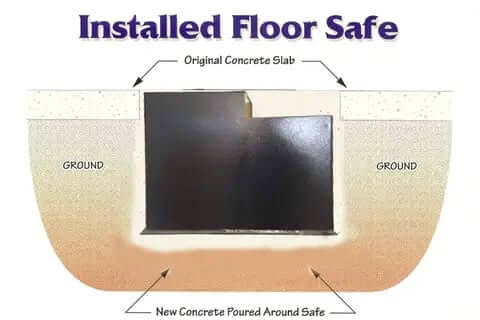
If I were starting a precious metals stack tomorrow and the collection was under $30,000, I would install a B-Rate floor safe in concrete before I bought anything else. A floor safe set into a slab is one of the most cost-effective security upgrades you can make at any collection level, and at smaller values it is often the right primary safe rather than a supplement to a stand-up unit.
Why Floor Safes Work So Well
A properly installed floor safe sits flush with the slab, gets covered with a rug or tile, and effectively disappears. The minutes a burglar spends searching your home do not produce results if they cannot find the safe. And if they do find it, what they are actually attacking is not a 100-pound steel box. It is a steel door set in a couple hundred pounds of concrete, which behaves like a small section of bank vault. The walls of a stand-up safe can be cut or punched out with the right tools; the walls of a floor safe are the foundation of your house.
A few characteristics that make floor safes a particularly good fit for gold and silver:
- Hardened steel drill-resistant door, typically 1/2-inch thick on the Hollon and Gardall models I carry. Even the higher-end consumer drill bits will not get through this without specialized equipment.
- Pyramid-shaped body that locks into the surrounding concrete and resists any attempt to pry the safe out as a unit.
- Group II UL-listed combination dial lock with hardplate and an independent relocker. No batteries, no electronics, nothing that can fail in 20 years of use.
- Insurance carriers recognize B-Rate floor safes installed in concrete as a credible protection tier, particularly when paired with a central station alarm.
- Compact interior is actually ideal for bullion and coins. Gold and silver are dense; you do not need a lot of cubic feet to store a serious amount of metal.
Trade-Offs You Should Know About
- Installation requires a concrete slab on grade. If you have a wood-framed floor or an upper-story location, a floor safe is not an option.
- Most floor safes are not fire rated. The surrounding concrete provides some thermal mass, but if fire protection is your priority and you only have one safe, a stand-up fireproof safe is the better answer.
- Installation is best done during new construction or a renovation, since cutting an existing slab and pouring around the safe is a job for a contractor and a concrete crew.
- Electronic locks are not warrantied on floor safes (Hollon will not warranty digital components installed in floor installations). Dial only.
My Floor Safe Recommendations
Both Hollon and Gardall make solid, B-Rate floor safes at price points where they are an easy decision.
Hollon B-Series (Best Value)
Hollon B1500 (entry size): 11.8" H x 13.5" W x 14.9" D exterior, B-Rate. The compact starter floor safe and the most affordable real concealment option in the lineup. $598.
Hollon B2500 (mid-size): 17.5" H x 13.5" W x 14.9" D, B-Rate. Same footprint as the B1500 but taller, which is the sweet spot for stacked monster boxes of silver. $654.
Hollon B3500 (wider): 18" H x 23.5" W x 13.5" D, B-Rate. Wider opening for storing larger items alongside bullion. $946.
Hollon B6000 (largest): 16.75" H x 35" W x 12.75" D, B-Rate. The biggest Hollon floor safe I carry, with the widest opening for large collections that need to spread out horizontally. $1,137.
All four Hollon floor safes use the same hardened steel construction, drill-resistant hardplate, UL Group II combination dial, three active 1-inch locking bolts, and full-length locking bar on the hinge side. The differences are purely interior dimensions.
Gardall Floor Safes (US-Made Alternative)
Gardall has been making safes in the USA for over 60 years and their floor safes are an excellent alternative if you prefer American manufacturing. Same B-Rate construction, same UL Group II dial lock, same pyramid body design for concrete anchoring.
Gardall G-G700 (smallest, lift-out door): 15.25" H x 8" W x 8" D, B-Rate. The narrowest profile floor safe, designed with a lift-out door for easier access. Ideal for a discrete installation in a closet floor. $562.50.
Gardall G-B1307 (compact): 12.25" H x 14.75" W x 12.88" D, B-Rate. Wider than the G-G700, suitable for tubed silver rounds or stacked gold coins.
Gardall G-B1311 (taller): 17.25" H x 12.88" W x 14.75" D, B-Rate, 1.2 cubic feet. The taller variant for vertical stacking of bullion.
Installation Reality Check
Installing a floor safe properly is not difficult, but it does need to be done right or the security benefits evaporate. The safe needs to be embedded in concrete to at least the lip of the door, with the surrounding slab in good condition. Done correctly, the safe is genuinely impossible to remove without a jackhammer and significant time. Done badly (set in loose fill, or with insufficient concrete around the body), the entire unit can be pried out as a single piece. If you are not comfortable with concrete work, hire a contractor. The labor cost is modest compared to what you are protecting.
One more thing: where you place the floor safe matters as much as the safe itself. Inside a closet, under a piece of furniture, or in a basement corner under a rug all work well. The whole point is concealment, so resist the temptation to put it somewhere obvious like the middle of the master bedroom floor where the rug placement itself becomes a tell.
Can a Gun Safe Be Used for Gold and Silver?
Best for: Combined firearms-and-metals storage when the gun collection itself justifies a high-end safe (specifically the AMSEC BFII series, the only gun safe at UL RSC Level II). Avoid if: Metals are your primary asset and you don't already need a serious gun safe.
This question comes up constantly, and the honest answer is: it depends on the gun safe, and the more honest answer is that for metals-only protection, dedicated metals safes are almost always the better choice.
Most gun safes on the market are built from 11 to 14-gauge sheet metal (an eighth of an inch at the thickest) and carry no burglary rating at all, or only a UL RSC Level I rating. RSC Level I is a 5-minute test against a single technician with household hand tools. That is enough to deter an opportunistic teenager. It is not enough to slow down anyone with a $200 angle grinder from Home Depot, and it is dramatically below the construction standard required for a TL rating. For meaningful precious metals storage, the typical gun safe is not adequate.
There is one notable exception: the AMSEC BFII series. These are the only gun safes on the market currently carrying a UL RSC Level II rating, which is a meaningfully tougher test than Level I (10 minutes, two technicians, expanded toolset) and gets you into a real burglary classification rather than "unrated" or "basic deterrence." The BFII is the strongest residential burglary rating you will find in a gun safe form factor.
Where the BFII Fits, Honestly
The BFII series is built primarily for gun owners who want serious burglary and fire protection for their firearms. It happens to be capable of also holding precious metals, and it is the only gun safe series I can recommend for that purpose without significant reservations. But here is the thing the marketing copy never says clearly: for metals-only protection, the BFII is not a value play at any tier.
Look at the price comparison:
- BFII6024 (the cheapest model in the BFII series): from $7,710. UL RSC Level II, 2-hour fire.
- Hollon PM-1014E: $1,720. UL TL-15, 2-hour fire. Stronger burglary rating at one-fifth the BFII price.
- AMSEC CEV1814: $2,621.25. UL TL-15, 2-hour fire. Stronger burglary rating at one-third the BFII price.
- Hollon MJ-1014E: $2,141. UL TL-30, 2-hour fire. Significantly stronger burglary rating at less than one-third the BFII price.
- Hollon MJ-1814E: $2,604. UL TL-30, 2-hour fire. Same TL-30 rating with more capacity, still about one-third the BFII price.
If precious metals are the asset you are protecting and you do not also need to store firearms, every safe on that comparison list gives you better burglary protection per dollar than the cheapest BFII. A floor safe set in concrete gives you better concealment-plus-construction value than the BFII at well under $1,200.
So when is the BFII the right answer? In one specific scenario: you have a meaningful firearms collection that needs proper storage, you have some precious metals to store as well, and you would rather have one safe than two. As a dual-purpose solution it is the best gun safe on the market for that combined use. As a metals-only safe, it is not the right tool.
AMSEC BFII6024: The BFII Entry Point
Price: from $7,710. AMSEC BFII6024.
The BFII6024 is the cheapest model in the BFII series and the right starting point if the BFII is the right safe for your situation. 24-inch width fits most closets and tight spaces. 17-gun capacity (16 in the safe plus 1 on the door) with adjustable shelving that lets you reconfigure for combined firearms and metals storage. What you get:
- UL RSC Level II burglary rating: the only gun safe series currently certified to this level. Uses the same testing tools as TL-rated safes, just for a shorter duration.
- 1/2-inch solid steel plate door, the thickest in its class.
- Dual-shell body with 11-gauge outer steel and a 5/16-inch inner steel liner, filled with AMSEC's proprietary DryLight concrete insulation rather than gypsum board. 2-inch total wall thickness.
- ETL-verified 2-hour fire rating at 1,200°F with interior temperatures maintained below 350°F.
- Active 4x locking system with ten 1.5-inch chrome-plated locking bolts, an active hardplate, and dual relockers (the same boltwork found on TL-15 safes).
- Exterior 59.25" H x 24" W x 21" D, 1,067 pounds. Manageable weight for upstairs installation versus the larger BFII models.
- Made in the USA, 5-year parts and labor warranty, lifetime warranty against burglary and fire damage.
Other Sizes in the BFII Series
If the BFII6024 is too small for your firearms collection, the series scales up across the same RSC Level II / 2-hour fire construction:
- BFII6024: 59.25" H x 24" W x 21" D, 1,067 lbs, 17 guns, from $7,710 (entry point).
- BFII6032: 59.25" H x 30" W x 21" D, 1,244 lbs, 20 guns, from $8,602.50.
- BFII6030: 59.25" H x 30" W x 26" D, 1,395 lbs, 24 guns, from $9,090.
- BFII6636: 65.25" H x 36" W x 26" D, 1,716 lbs, 26 guns, from $10,578.75.
- BFII7240: 71.25" H x 40" W x 26" D, 1,991 lbs, 60 guns, from $12,232.50 (the biggest in the series).
Two-Safe Alternative Worth Considering
If your firearms collection is small (a few guns rather than a full collection), and your metals holdings are significant, it is worth considering the two-safe alternative. A modest gun safe for the firearms plus a dedicated TL-rated safe for the metals will typically cost less than a single BFII and give you better protection across both assets. The single-safe BFII solution is the right answer when the gun collection itself justifies BFII-level security, not when the metals are the primary asset.
Weight, Anchoring, and Placement
In short: An unanchored safe of any rating can be removed by two people with a furniture dolly. Anchor every stand-up safe; floor safes anchor themselves through concrete embedment. Placement matters as much as the safe itself.
For any meaningful precious metals storage in a stand-up safe, 500 pounds is a practical minimum empty weight, and 750+ pounds is preferred. UL requires TL-rated safes to weigh at least 750 pounds or be anchored to a structural floor. Weight delays removal and anchoring prevents it. You want both. (Floor safes sidestep this issue entirely; once they are in concrete, they are not coming out.)
Proper Anchoring
Correct anchoring to a concrete floor uses 1/2-inch by 3-inch wedge anchor bolts through pre-drilled holes in the safe's base. For wood floors, anchor through the subfloor into the floor joists using 5/8-inch Grade 8 lag bolts. All the stand-up safes I recommend in this guide ship with pre-drilled anchor holes and hardware. Never drill your own holes through the safe body. Doing so can compromise the burglary rating, the fire rating, or both, and will void most warranties.
Placement
The best location for a stand-up precious metals safe is a main-floor interior closet with climate-controlled air. Stable temperature, low humidity, discreet positioning, and reasonable daily access. Basements offer excellent concrete-floor anchoring but require active humidity management. Garages are not recommended due to extreme temperature swings, elevated humidity, and easier access for a thief who can attack the safe with power tools out of view from the street.
Floor load capacity matters for heavier safes on upper floors. Standard residential framing is rated for around 40 pounds per square foot in living areas, and a 1,000 to 1,500-pound safe needs to be placed perpendicular to the floor joists, as close to a load-bearing wall as possible. For safes above 750 pounds on upper floors, a quick structural assessment is cheap insurance.
The Hidden Threat: Humidity
In short: Fireproof safes can run higher humidity than the surrounding room because of bound water in the insulation. Manage it with rechargeable desiccants and Intercept Shield products; monitor with a digital hygrometer.
Most precious metals owners never think about humidity until they open the safe one day and find tarnish patterns or, worse, verdigris on copper components. Here is the surprising part: fireproof safes can actually make humidity problems worse, not better.
Fire-resistant insulation, whether gypsum board or concrete composite, contains chemically bound water that slowly releases into the safe interior over time. Collectors on numismatic forums regularly report measuring 70%+ relative humidity inside fireproof safes while the surrounding room sits at 40 to 50%. At those levels, silver tarnishes rapidly, copper develops verdigris, and even bright gold can develop spots from alloy components.
Ideal Storage Conditions
- Relative humidity: 25 to 40% for general collections; below 20% for premium copper coins or blast-white silver.
- Temperature: 65 to 75°F with minimal fluctuation. Sudden swings cause condensation, which is worse than steady moderate humidity.
Humidity Control That Actually Works
Rechargeable desiccants (silica gel, Eva-Dry): The primary humidity control method for TL-rated safes and floor safes, both of which generally lack electrical access. Quality desiccants can pull interior humidity down by 6 to 10 percentage points. These need to be periodically dried out (a kitchen oven works) or replaced. Place them on the shelves nearest the door where airflow is greatest, and rotate them on a schedule (every 4 to 8 weeks depending on ambient humidity).
Intercept Shield products: Originally developed by AT&T Bell Labs, these use copper-impregnated polymer to neutralize corrosive gases (hydrogen sulfide, sulfur dioxide, chlorine compounds) before they reach coin surfaces. Unlike volatile corrosion inhibitors, they do not coat coins or off-gas chemicals onto numismatic surfaces. Storing coins in Intercept Shield-lined containers inside the safe is the gold standard for serious collections.
My practical approach: keep rechargeable desiccants on the shelves and rotate them regularly, store the actual coins inside Intercept Shield bags or boxes, and monitor conditions with a cheap digital hygrometer. Check the hygrometer every month or two.
Insurance: The Other Half of Protection
In short: Standard homeowners caps at around $200 for metals. Above $5,000 you need a scheduled endorsement; above $50,000 you typically need a standalone collector's policy. A monitored alarm roughly doubles supported coverage.
A safe that meets your insurer's requirements is the difference between a partial recovery and effectively no coverage. The standard rule of thumb across most major insurers:
- Below $5,000 in metals: typically falls within the standard homeowners policy precious metals cap (often $200 per item, $1,000 to $2,500 aggregate). Usually no special endorsement required.
- $5,000 to $50,000: scheduled endorsement on your homeowners policy. Insurer will usually require a UL-rated safe and may require photos and serial numbers.
- Above $50,000: standalone collector's policy through a specialty carrier. UL TL-15 minimum, with TL-30 preferred. A central station monitored alarm system can roughly double the supported coverage limits.
Always check with your specific insurer before buying. Some require a particular UL rating; others have weight or anchoring requirements; a few require central station monitoring above a dollar threshold. The TL-rated safes in this guide will satisfy almost any residential carrier's requirements. B-Rate floor safes can also be acceptable to insurers when properly installed in concrete and paired with an alarm, but confirm with your carrier before relying on this.
Final Buying Checklist
Before you place an order, work through these:
- What is your collection's total replacement value, including numismatic premiums and likely appreciation over the next 5 to 10 years? This sets your minimum rating.
- Have you confirmed your insurer's safe-rating requirements?
- Do you have a concrete slab where a floor safe could be installed, and would concealment value justify going that route?
- Do you also need to store firearms? If yes, weigh the BFII series against the two-safe alternative (separate gun safe plus dedicated metals safe).
- Where will the safe go? Measure door widths, hallway turns, and any stairways. Account for the 2 to 4 inches that handles and hinges add to the listed exterior dimensions.
- Do you need professional delivery and installation? Anything over 500 pounds is a two-person job at minimum, and TL-rated safes usually require professional movers with stair-climbing equipment.
- Does the safe have electrical access if you plan to use interior lighting?
- Are you using an in-home alarm? Insurance limits roughly double with central station monitoring.
The Bottom Line
Stolen precious metals are rarely recovered and, once melted down, are effectively untraceable. The math on protecting a gold and silver collection is straightforward: the safe is the investment that protects all the other investments. Buy below your insurer's requirements and the policy may not pay out. Buy a gun safe and call it a precious metals safe and you have a 5-minute deterrent against anyone with a basic toolkit.
Match the rating to the value of what you are protecting:
- Holdings under $30,000 (metals only): a Hollon or Gardall B-Rate floor safe installed in concrete is my favorite play if you have a slab. Concealment plus 1/2-inch hardened steel for under $1,200 is the best value in the precious metals safe market. If you cannot install a floor safe, step up to a UL TL-15 stand-up safe (Hollon PM-1014E from $1,720 or AMSEC CEV1814 at $2,621.25).
- $30,000 to $100,000: Hollon PM-1014E for best value, AMSEC CEV1814 for AMSEC build quality.
- $100,000 to $250,000: Hollon MJ-1014E for best value, AMSEC CF1814 for premium US-made construction.
- Above $250,000: TL-30X6 or vault-grade; contact us for a tailored recommendation.
- Combined firearms and precious metals storage: AMSEC BFII series starting with the BFII6024 at $7,710. The BFII is the right answer when the gun collection itself justifies BFII-level security, not when metals are the primary asset. If metals are your priority and you have a smaller gun collection, separate safes will protect both assets better for similar or less total spend.
Browse our full range here at Guardian Safe and Vault, or get in touch if you want help matching a specific safe to your collection and insurance requirements. We are an authorized dealer for Hollon, AMSEC, Hayman, and more, and I will give you a straight answer about what you actually need rather than upselling you into more safe than the situation calls for.