The Ultimate Guide to Storing Gold and Silver

If you have spent any real money on physical gold and silver, you have almost certainly asked yourself the same question: where do I actually put this stuff?
The answer is rarely a single location, and it almost never matches what people imagine when they first start stacking. A few American Eagles in a sock drawer works at 20 ounces. It does not work at 200, and it definitely does not work at 2,000. Every storage method has a sweet spot in terms of holding size, threat model, accessibility needs, and budget, and the right setup for most serious collectors involves two or three methods used in combination.
This guide walks through each option in detail. For each one I explain how it works, what it does well, what it does badly, and which specific providers are worth knowing about. I have tried to present them as comparable choices rather than as a ladder you climb. Many serious collectors use two or three of these methods in combination, and the right combination is a personal decision rather than a universal formula.
Two quick notes before I start. First, this is a long article because the topic is genuinely more complicated than most short blog posts make it out to be. Second, I am not a tax advisor or a financial advisor. Several of the items in this guide (especially the overseas options and IRS reporting) have tax implications that depend on your specific situation. Talk to a qualified professional before acting on the cross-border content.
Storage Methods at a Glance
| Method | How it works | Strengths | Trade-offs |
|---|---|---|---|
| Home safe | You buy a properly rated safe and keep the metal at your residence | Immediate access, no third-party risk, no ongoing fees, full privacy | Physical risk depends on safe rating; concentrated in one location; insurance is your responsibility |
| Bank safe deposit box | Rented drawer inside a bank vault, accessed during banking hours | Low cost, broadly available, offsite from your home | Contents are not FDIC insured; bank-hour access only; branch consolidation and closure risk |
| Domestic private vault | Non-bank depository operating purpose-built UL-rated vault facilities | Stronger security than most banks, optional insurance, longer access hours, not bank-regulated | Ongoing fees, still domestic jurisdiction, separate from FDIC system |
| Allocated bullion account | Specific bars or parcels held in your name at a professional vault, audited and insured | Full replacement insurance, audited, instant liquidity, IRA eligible | Counterparty exposure to the dealer; percentage-of-value fees; trust in the custodian |
| Overseas private vault | Safe deposit box or allocated storage at a vault in another jurisdiction | Genuine jurisdictional separation, often outside FBAR if a true safe deposit box | Travel or shipping required, harder emergency access, tax reporting complexity |
The rest of this guide covers each row in detail, plus the underlying factors (threats, insurance, succession, transit) that cut across all of them. Use the comparison table as a map; jump to whichever sections are most relevant to your situation.
Understanding the Threats You Are Actually Protecting Against
Different storage methods protect against different threats. Most people default to thinking about theft, but theft is just one of five distinct threat categories, and a good storage strategy considers all of them.
Burglary and home invasion. The most common scenario. A burglar enters the home, spends 8 to 10 minutes inside, and goes straight for compact high-value items. Gold and silver are the textbook target. Property crime trends are tracked by the FBI Crime Data Explorer, which still reports hundreds of thousands of residential burglaries per year despite a long-term decline. Home safes and concealment handle this threat directly; any form of offsite storage eliminates the asset from the threat entirely.
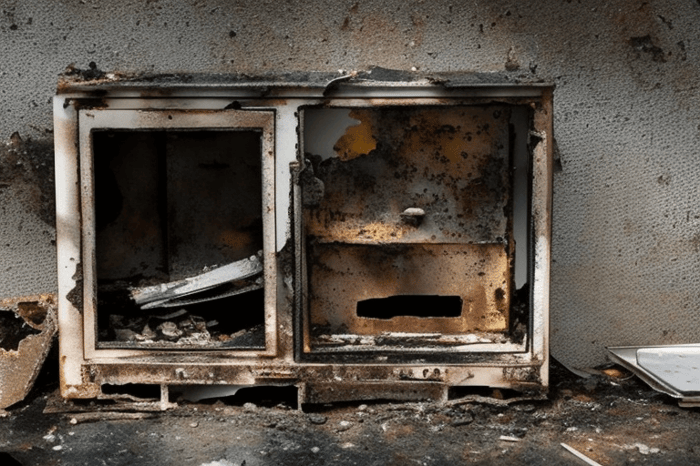
Fire and natural disaster. House fires reach 1,100 to 1,300°F. Gold and silver themselves do not melt at those temperatures, but graded coin slabs, paper certificates, and documentation do. Floods, hurricanes, and earthquakes can also cause loss. UL-rated fireproof safes handle this at home; offsite storage in a vault eliminates the risk entirely for the offsite portion of your holdings.
Family emergency access. An overlooked threat. If you get hit by a bus tomorrow, can your spouse, executor, or trustee actually retrieve your holdings? Hidden home stashes and anonymously held overseas boxes both fail this test badly. Documented storage with clear succession planning addresses this. Pure secrecy works against it.
Counterparty failure. Any third-party storage involves trust in the institution holding your metal. Allocated storage with audited segregation and independent insurance reduces this dramatically. Unallocated bullion accounts and ETFs expose you to it in full. Home storage and true private safe deposit boxes (where the vault never has the right to touch your contents) sidestep it.
Jurisdictional and policy risk. Includes things like FDR’s Executive Order 6102 in 1933 (gold ownership was banned and citizens were forced to sell to the government at $20.67 per ounce, after which the dollar was devalued and gold was repriced at $35), civil asset forfeiture, divorce proceedings, frivolous lawsuits, and capital controls. How much weight to give this category is a personal judgment. Holding some metal outside your home jurisdiction is the standard hedge.
A storage strategy that addresses all five looks different depending on your priorities. Someone primarily worried about theft and fire will land on a very different setup than someone primarily worried about jurisdictional risk, even with identical holdings.
First Principle: Concealment Beats Confrontation
Whatever storage method or combination you choose, the single most underrated factor in real-world security is concealment. The best safe in your home is the one a burglar never finds. The best vault in the world is one that nobody knows holds your bullion. Loose lips and ostentatious displays defeat more expensive storage than locksmiths and grinder discs ever will.
Practical implications:
Do not tell people you own precious metals. Friends, neighbors, contractors, cleaning staff, and family members are statistically the most common source of inside-job tipoffs. The fewer people who know, the safer your holdings are.
Avoid showing off online. Public stack photos, YouTube reveal videos, and forum signatures with your holdings are all forms of broadcasting that you are worth robbing.
If you must transport bullion, do not advertise. No Heritage Auctions tote bags. No precious metals dealer logos on the side of the box. Plain packaging, ideally in a vehicle that does not announce wealth.
Concealment compounds with the rating of your safe. A UL TL-30 safe in a bedroom corner under a sheet beats the same safe with a spotlight on it. A B-Rate floor safe under a rug is more secure than a UL TL-15 stand-up safe in the middle of the living room.
Home Storage
Home storage is the most direct option: you buy a properly rated safe, install it in your residence, and keep the metal there. No fees, no third parties, no paperwork, immediate access whenever you want it. For collectors who prioritize direct control and zero ongoing costs, this is the default and often the only storage they ever use.
Strengths
Zero ongoing fees once the safe is purchased.
Immediate access at any hour.
No counterparty risk; nobody can fail and take your metal with them.
Complete privacy; no records exist anywhere.
No exposure to bank closures, vault company failures, or jurisdictional events affecting third parties.
Trade-offs
Physical security depends entirely on the safe rating and concealment. A cheap home safe is worse than no safe at all because it concentrates the asset in one obvious location.
The asset is in one location. A house fire, flood, or burglary that defeats the safe wipes out everything.
Insurance is your responsibility. Standard homeowners policies cap precious metals at $200 per item / $1,000-$2,500 aggregate without a scheduled rider, and your insurer may want extensive documentation.
Succession depends entirely on your planning. If you do not document the location, combination, and inventory, heirs may never find it.
What You Need in a Home Safe for Precious Metals
The full specification discussion is in my companion guide, but in summary: precious metals owners need a safe with a UL burglary rating, a UL or ETL fire rating of at least 1 hour at Class 350 (2 hours preferred), proper anchoring, and weight or concealment that resists simple removal from the home. Sub-$500 “home safes” from big-box stores generally do not meet any of these criteria meaningfully and should not be used for serious metals storage.
The appropriate rating tier scales with collection value:
B-Rate floor safe set in concrete is the most cost-effective option for smaller holdings if you have a concrete slab. If you do not have a slab, step up to a dedicated TL-15 safe (see the next tier) for metals-only protection. (If you also have firearms to store, see the note below the bullets.)
UL TL-15 for collections roughly $30,000 to $100,000: the Hollon PM-1014E at $1,720 or the AMSEC CEV1814 at $2,621.25.
UL TL-30 for collections $100,000 to $250,000: the Hollon MJ-1014E at $2,141 (value pick) or the AMSEC CF2518 at $5,527.50 (premium step-up).
TL-30X6 or vault-grade construction for collections above $250,000.
If you also need to store firearms and would prefer one safe rather than two, the AMSEC BFII series is the strongest gun safe on the market and the only one carrying a UL RSC Level II burglary rating. It starts with the BFII6024 from $7,710. Worth noting, however, is that the BFII is a premium gun safe whose burglary rating (UL RSC Level II, a 10-minute test) is a step below the TL-15 and TL-30 metals safes listed above, despite costing more than every TL-15 and most TL-30 options. It is the right call when the firearms collection justifies the spend and the metals are a secondary use case but for metals-only protection, the TL-rated safes give you better security per dollar.
Full breakdown of specific models, ratings, lock options, and prices is in my dedicated guide: The Best Safes for Gold and Silver Coins and Bullion in 2026.
Placement and Concealment
Where you put the safe matters as much as which safe you buy.
Main-floor interior closet is ideal: stable climate, discreet, accessible. Behind hanging clothes is better than the back wall in plain view.
Basement corners work for heavier safes, but require humidity control. Concrete floors are excellent for anchoring.
Avoid the master bedroom unless the safe is genuinely concealed. It is the first place burglars search.
Avoid garages: temperature swings, elevated humidity, and easier access for tools and noise without disturbing the rest of the house.
Floor safes in concrete slabs are the most concealed option available.
Bank Safe Deposit Boxes
Bank safe deposit boxes are the most familiar offsite storage option and historically the default fallback for anything too valuable to keep at home. There are legitimate use cases, but the limitations are larger than the marketing typically suggests, and the storage profile has changed substantially over the last two decades as US banks have consolidated and exited the business.
Strengths
Low cost: $50 to $250 per year depending on box size.
Broadly available, though decreasingly so in the US.
Bank vaults are typically more secure than residential safes (against burglary; less so against the bank’s own failures).
Offsite from your home, so survives residential fires and burglaries.
Trade-offs
Contents are not FDIC insured. This is the single most important thing to understand. The FDIC explicitly notes that it insures bank deposits, not the contents of safe deposit boxes. If the bank is robbed, floods, or loses your box contents through staff negligence, recovery is up to the bank’s own liability policy, and most rental agreements explicitly limit that liability to a few hundred dollars or disclaim it entirely. You need to maintain your own insurance for the contents, typically through a scheduled rider on your homeowners policy, and your insurer may want photos, serial numbers, and proof of contents that you may not want to provide.
Bank hours and access. You can only access your box when the bank is open. That is fine for most situations, but it is exactly the wrong access profile for a true emergency. The 2020 Covid bank shutdowns and the 2008 financial crisis bank holiday discussions both raised real questions about access during major disruptions.
Branch closures and consolidation. US banks are closing safe deposit box programs steadily as part of broader branch consolidation. A widely-cited 2019 New York Times investigation documented the steady decline of bank safe deposit services along with the limited liability banks accept for box contents. When a bank closes or sells a branch, you may have weeks of notice to retrieve your contents, sometimes from a location far from where you originally rented.
Contents inventory and chain-of-custody disputes. There have been documented cases of safe deposit box contents being missing when the renter returned, with no clear chain of custody record. The bank says you took it out. You say you did not. Without your own video documentation and a detailed inventory, these disputes are very difficult to resolve in your favor.
Legal access and freezes. Bank safe deposit boxes can be frozen by court order, IRS lien, or as part of an estate proceeding. They are subject to the bank’s KYC and AML reporting obligations even though the contents themselves usually are not. If you are subject to a tax dispute, divorce proceeding, or civil litigation, your bank safe deposit box is reachable in ways that some other storage methods are not.
Best Use Cases
Given the limitations above, bank safe deposit boxes work best for:
Original copies of provenance documents, certificates of authenticity, and graded coin grading certificates that you want offsite from the metals.
Photographs and serial number lists of holdings stored elsewhere.
Estate planning documents and instructions for accessing other storage.
A small portion of bullion, properly insured separately, where bank-hour access is acceptable.
Using a bank safe deposit box as the primary storage for a meaningful precious metals holding is the use case I would caution against. The combination of no FDIC coverage, restricted access, branch closure risk, and chain-of-custody uncertainty makes it the wrong tool for that job.
Domestic Private Vaults
Private vault companies are independent businesses operating purpose-built UL-rated vaults, sometimes called “non-bank safe deposit” or “private depository” services. They are not banks, so they sit outside the banking regulatory framework, and most offer the security infrastructure that bank safe deposit boxes used to but no longer reliably do.
Strengths
Not banks, so they are not subject to the same FATCA/CRS reporting regime that applies to bank accounts. (US tax obligations on the contents still apply; this is about reporting the box itself.)
Vaults are typically Class III UL-rated, audited, and monitored 24/7 with armed response.
Access hours are often 7 days a week with extended hours; some offer 24/7 access with biometric authentication.
Contents insurance is usually available, either bundled or added by the schedule.
They cannot be ordered to close by a banking regulator, although they remain subject to civil legal process.
Trade-offs
Ongoing annual fees, typically $200 to $800 per year for a small to medium box, plus insurance riders on the value of contents.
Still domestic jurisdiction, so they offer no protection against jurisdictional or policy risk in your home country.
Fewer locations than banks; you may need to travel further to access your box.
As private companies, they can fail or be acquired in ways that affect access and terms.
Established US providers
This is not an endorsement of any specific company, but the established names in the US private vault space include International Depository Services (multiple locations), Delaware Depository, Sarasota Vault Depository (Florida), Brink’s private client storage (multiple cities, typically accessed via a precious metals dealer rather than directly), and Loomis (a partner facility used by several major dealers). For an IRA-eligible setup, Brink’s, IDS, and Delaware Depository are the most commonly approved trustees.
What to Verify Before Signing Up
Vault class rating (UL Class III is the standard for high-security).
Insurance arrangements: who underwrites the policy, what is the per-box limit, and what events are covered.
Auditing: is the facility independently audited, and how often?
Access policy: hours, identification requirements, and what happens if you cannot personally attend (succession, power of attorney).
Reporting obligations: a true private safe deposit box, where you hold the only keys and the vault never touches the metal, typically does not create a reportable financial account. Allocated storage accounts where the vault holds title or co-signing rights may. Confirm in writing.
Allocated Bullion Accounts
Allocated bullion storage is a different model from a safe deposit box: rather than depositing your own coins, you buy bullion through a dealer and it is then stored in a vault under your specific title, with serial numbers or unique parcel IDs assigned to your account, audited regularly, and insured to full replacement value. You can typically buy, sell, or take delivery on demand.
Strengths
Full replacement-value insurance is standard, included in the storage fee.
Independent audits (often by Bureau Veritas or a comparable firm) verify that the metal exists and matches your records.
Instant liquidity: the same dealer that sold you the metal will buy it back at spot or close to spot.
IRA-eligible structures are widely available.
Online portals provide real-time inventory, transaction history, and photos.
No physical handling, no concealment concerns at your residence.
Trade-offs
Counterparty exposure to the dealer is real, even with allocated storage. If the dealer fails badly enough to compromise its records or fail an audit, recovery may be complicated even when your metal legally belongs to you.
Ongoing fees are typically a percentage of the metal value, usually 0.4-1% per year for gold and 0.6-1.2% for silver.
You do not physically hold the metal, which defeats some of the original motivation for owning physical precious metals in the first place.
US persons may have FBAR/FATCA reporting obligations depending on the account structure.
Allocated, Pool Allocated, and Unallocated: the Distinction that Matters
This is the single biggest pitfall in the precious metals storage space, and the source of most of the lawsuits and dealer failures that have happened over the years.
Allocated storage means specific bars or coins, identified by serial number or unique parcel ID, are held in your name. They are your legal property. The dealer or vault holds them as a custodian. If the dealer goes bankrupt, your bullion is not part of the bankruptcy estate. You can audit the bars, see photos of them, and in most cases physically inspect them with an appointment.
Pool allocated storage is a middle ground: a pool of metal is fully allocated to all customers collectively, with each customer owning a fractional share. The pool is real, audited, and not subject to dealer bankruptcy, but you do not own specific bars. This works fine for most purposes and is cheaper than fully segregated allocated storage.
Unallocated storage means you have a claim on a quantity of metal, but no specific bars are assigned to you. You are essentially a general creditor of the dealer or bullion bank. If the dealer fails, you stand in line with other creditors. Unallocated storage is cheaper, which is why dealers push it, but the counterparty risk is fundamentally different.
Allocated and pool allocated are both reasonable structures. Unallocated storage with any dealer that is not a sovereign mint or a top-tier LBMA member is a structure I would not recommend.
Established Providers
There are dozens of allocated bullion account providers worldwide. A few of the most established and widely used, in alphabetical order:
BullionStar (Singapore, with a partner vault in New Zealand and locations elsewhere). LBMA-approved bullion dealer, fully insured allocated storage, comprehensive online inventory management, Bureau Veritas audited. Gold storage fees around 0.59% per year, silver and platinum around 0.88%. Widely used by individual investors looking for Singapore or NZ exposure without large minimums.
Perth Mint Depository (Western Australia). Operated by The Perth Mint, owned by the Government of Western Australia, with all precious metal holdings backed by a government guarantee. Stored more than AUD 10.4 billion in customer metal in 2024-25. Allocated, pool allocated, and unallocated options. Minimum trade size $5,000. One of the most institutionally credible allocated storage options globally.
Silver Bullion Group / S.T.A.R. Storage (Singapore). LBMA member, operating from its purpose-built facility The Reserve, which opened in 2023. The S.T.A.R. (Storage, Transfer, And Reporting) program uses a unique parcel ownership structure where each bullion parcel is identified by a unique ID and owned outright by the customer under Singapore law, not held on the dealer’s balance sheet. Total insurance coverage was raised to USD 1.5 billion in April 2025 and further to USD 2 billion by June 2025. Offers a peer-to-peer secured lending platform that lets you borrow against your bullion.
Strategic Wealth Preservation (SWP) (Cayman Islands, with global storage network). LBMA affiliate member, operates a Class III UL-rated vault in Grand Cayman in a purpose-built 2023 facility, plus partner vaults in Canada, six US locations (Texas, Delaware, Wyoming, Miami, Los Angeles, New York), Switzerland, Singapore, Dubai, UK, Germany, and Liechtenstein. Single account opens all locations. Allocated and segregated storage with Bureau Veritas audits. Insurance underwritten by Lloyd’s of London via Marsh.
Other allocated bullion account providers worth knowing about include GoldMoney, BullionVault, Hard Assets Alliance, GoldCore, and OneGold (a partnership between APMEX and Sprott). Each has its own structure, fee schedule, and jurisdictional setup. None of these are GSV partners; I am listing them for awareness only.
Reporting Implications for US Persons
This is where things get complicated, and where you absolutely should talk to a tax professional. Generally speaking:
A foreign bank or brokerage account holding bullion is reportable on the FBAR (FinCEN Form 114) if total foreign financial accounts exceed $10,000 at any point during the year, and potentially on Form 8938 (FATCA) at higher thresholds.
Bullion held in a true allocated storage account where the dealer holds the metal as a custodian and the metal is your legal property is generally considered personal property rather than a financial account, but interpretations vary and the conservative position is to report.
Bullion held in a true safe deposit box, where you hold the only keys and the vault never has the right to touch the metal, is typically not a reportable financial account. This is one reason private safe deposit boxes at facilities like The Safe House (Singapore), Das Safe (Vienna), and New Zealand Vault are popular with US persons.
Capital gains on physical precious metals are taxed in the US at the collectibles rate (currently 28% maximum) regardless of where the metal is stored.
None of the above is tax advice. Always confirm with a qualified professional who knows your specific situation.
Overseas Private Vaults
Overseas vaulting means holding metal in a safe deposit box or allocated account at a vault in another country. It is the most complex of the five options and the one most heavily promoted by the sovereign-individual financial newsletter crowd, which means much of the publicly available information leans on a specific worldview. I will try to give you the practical version without the ideology.
Strengths
Genuine jurisdictional separation. The metal is not subject to your home country’s legal process in the same way domestic storage is.
Diversification against domestic policy risk (capital controls, civil asset forfeiture, frivolous litigation, divorce proceedings).
Some structures (true private safe deposit boxes where the vault never has the right to touch the metal) are typically outside FBAR/FATCA reporting requirements for US persons. Confirm with a tax professional.
Often located in jurisdictions with stable legal systems, no capital gains tax on physical bullion, and strong property rights.
Trade-offs
Travel or shipping required to access or audit physically. For US-based clients, even one-day access takes a flight.
Tax reporting complexity. Even when the account itself is not reportable, the underlying gains still are.
Fees and minimums are typically higher than domestic options.
Currency, language, and time-zone friction in dealing with administrative matters.
Succession planning is harder; surviving family members may not even know the account exists, and the documentation needed to claim it is complex.
The Disclaimer that Needs Repeating
I do not personally endorse any of the providers below. Guardian Safe and Vault has no commercial relationship with any of these companies; we do not receive referral fees, commissions, or other compensation from them. The information below is included for educational purposes only. Verify everything independently and consult both a tax professional and a qualified attorney before opening an account or sending metal anywhere overseas.
Das Safe, Vienna
Website: dassafe.com
Probably the most famous private vault in Europe. Family-run business in Vienna’s 8th district (Josefstadt), located at Auerspergstrasse 1. The facility uses 1,000 tonnes of reinforced concrete around the vault, with 24/7 surveillance, motion and vibration detectors, and a fire suppression system. Boxes are insured up to EUR 36,336 by default, with optional upgrades.
Historically Das Safe was famous for fully anonymous boxes, but this has changed: due to a 2017 EU rule change, boxes are no longer fully anonymous. Identification is now required. The smallest box sizes are typically fully rented out and have been for years. Available sizes start at the “D” (21 x 30 x 48 cm) at around EUR 635 per year, with larger boxes scaling up from there. Payment up to 10 years in advance is accepted.
Das Safe is genuinely well-regarded for service and discretion. Other private vaults in Vienna include Sparta Safes and the high-end Palais Coburg vault, both of which have appeared in more recent reviews.
New Zealand Vault, Wellington and Auckland
Website: nzvault.co.nz
Established in 1931, privately owned, independent of the banking sector. Operates two locations: Wellington (1 Willis Street, in the State Insurance Tower) and Auckland (105 Queen Street). Treasury-grade vault construction, built to Lloyd’s of London specifications. The Wellington vault is the storage location used by BullionStar’s New Zealand operation.
Offers both safe deposit boxes (in Wellington and Auckland) and a fully allocated and segregated bullion depository (Wellington only, for holdings over 10kg). Safe deposit boxes use a dual-key system. International clients can have international auditing firm Crowe Australasia hold the second key as their agent, allowing remote provisioning and management of the box. Bullion can be purchased directly through New Zealand Vault and deposited remotely.
New Zealand offers genuine jurisdictional separation from the US and Europe, a stable Common Law legal system, no capital gains tax on physical bullion held by individuals, and strong property rights. The downside is the travel distance, which is significant for everyone other than Australians.
Silver Bullion Group / The Safe House, Singapore
Websites: silverbullion.com.sg and thesafehouse.sg
Founded in 2009 by Gregor Gregersen. Now operating from a purpose-built 180,000 square foot facility called The Reserve, which opened in 2023. The facility houses The Safe House precious metals vault (one of the highest-capacity private bullion vaults in the world), along with onsite testing labs, secure logistics, and storage for other physical assets including watches and art.
Two main products. The S.T.A.R. allocated storage program uses a unique parcel ownership structure where each parcel of bullion has a unique ID, RFID tag, and is owned outright by the customer under Singapore law (the customer is the legal title holder, not a creditor of Silver Bullion). The Safe House safe deposit boxes are separately offered for clients who want a private, sealed box that no third party has keys to. Class II boxes (designed for gold and platinum, 500 oz capacity, $200,000 USD liability protection included) rent for SGD 1,280 per year. Class I boxes (designed for silver, 202 kg capacity) rent for SGD 1,600 per year. Initial remote provisioning is available.
Total insurance coverage on the facility was raised to USD 1.5 billion in April 2025 and further to USD 2 billion by June 2025, brokered by Marsh and underwritten by Lloyd’s of London. The Reserve is currently undertaking a phase 2 expansion announced in October 2025 that will quintuple capacity to 2,500 tons of gold across 38 vaults.
Singapore is one of the most stable jurisdictions in the world for asset storage: rule of law, no GST on investment-grade precious metals, no capital gains tax for individuals, and politically neutral. The Reserve’s combination of scale, vertical integration (the company owns its vault, its testing labs, and its parent dealer), and clear legal title ownership makes it one of the best-engineered storage setups available to retail investors.
Strategic Wealth Preservation (SWP), Cayman Islands
Website: swpcayman.com
Established Cayman-based precious metals dealer and vault operator. Headquartered in Grand Cayman in a purpose-built Class III UL-rated facility constructed in 2023, which SWP owns outright. LBMA affiliate member. The Cayman Islands are a British Overseas Territory with stable, modern legal and political systems, no direct taxation, no import/export tariffs on precious metals, and proximity to North American urban centers (one-hour flight from Miami).
SWP’s pitch is “one account, one world”: opening a single SWP account gives access to allocated and segregated storage across Cayman, six US locations (Dallas, Delaware, Wyoming, Miami, LA, New York), Canada, Switzerland, Singapore, Dubai, UK, Germany, and Liechtenstein. Each location is a Class III UL-rated vault operated by SWP or a vetted partner (Loomis, International Depository Services, Brink’s, others depending on location). All storage is allocated, segregated, and insured to full replacement value via Lloyd’s of London. Annual audits by Bureau Veritas.
SWP is particularly relevant for North American investors who want offshore storage without traveling to Europe or Asia, and for investors who want the ability to move metal between jurisdictions over time. As with all overseas storage, US persons should consult a tax professional about reporting obligations.
Other Overseas Options Worth Knowing About
This guide is not exhaustive. Other established providers used by precious metals investors include:
BullionStar (Singapore, with a partner vault in New Zealand): LBMA-approved bullion dealer, fully insured allocated storage, comprehensive online inventory management, Bureau Veritas audited. Lower minimums than some institutional providers.
Perth Mint Depository (Australia): government-owned, government-guaranteed precious metal storage, particularly attractive for Australasian investors and those who want sovereign-level institutional credibility.
Brink’s Global Services (multiple jurisdictions): the institutional logistics giant. Brink’s runs vaulting partnerships with most major US bullion dealers (Citadel by APMEX, Birch Gold, etc.) and operates standalone facilities in Salt Lake City, New York, Los Angeles, London, Zurich, Singapore, and elsewhere. Typically accessed through a partner dealer rather than directly.
Loomis International: similar profile to Brink’s, used by many dealers and bullion programs as a behind-the-scenes vault operator. SWP uses Loomis for its Miami and LA US storage locations.
Sparta Safes and Palais Coburg (Vienna): newer private vault options in Vienna with more contemporary facilities than Das Safe.
Jurisdictional Character
Each of the established overseas storage jurisdictions has its own legal and practical character:
Switzerland: the traditional answer. Strong rule of law, strong banking secrecy historically, but increasingly aligned with EU and US tax transparency norms.
Austria: similar to Switzerland but with more remaining anonymity for private safe deposit boxes (though as noted, no longer fully anonymous since 2017).
Singapore: politically neutral, common law system, no GST on investment-grade bullion, no capital gains tax, and one of the lowest-corruption jurisdictions in the world.
New Zealand: stable common law system, no capital gains tax on physical bullion, geographically remote, English-speaking, easy for North Americans to deal with administratively.
Cayman Islands: British Overseas Territory, no direct taxation, no import duties on metals, one-hour flight from Miami. Popular with North American investors who want offshore exposure without travel to Europe or Asia.
Dubai: increasingly important hub, particularly for clients with Asian or Middle Eastern business ties.
Insurance: How Each Method Handles It
Insurance is one of the areas where the storage options diverge most. A quick summary:
Home safe: requires your own policy. Standard homeowners typically caps precious metals at $200 per item / $1,000-$2,500 aggregate without a scheduled rider. With a rider, coverage can extend well into six figures depending on the safe rating and any alarm requirements.
Bank safe deposit box: contents are not FDIC insured. You need your own scheduled coverage. The bank’s own liability is typically limited to a few hundred dollars per box.
Domestic private vault: typically offered bundled or as an add-on. Read the policy carefully: per-box limits, covered events, and exclusions matter. Underwriting is often via Lloyd’s or a similar specialty market.
Allocated bullion accounts: full replacement-value insurance is standard, included in the storage fee. The major providers all use Lloyd’s-underwritten policies brokered through Marsh or similar firms. Look for at least 100% replacement value, all-risks coverage including “mysterious disappearance” and “fidelity” (which covers internal theft).
Overseas safe deposit boxes: typically include some base insurance (e.g., EUR 36,336 at Das Safe, USD 50,000 to 200,000 at The Safe House depending on box class), with optional upgrades.
For any meaningful holdings, confirm the coverage in writing before depositing. This is one area where the marketing claims and the actual policy terms can differ substantially.
Transit and Movement
If you decide to use any offsite storage, particularly overseas, the obvious follow-up question is: how do you actually get the metal there? There are three legitimate approaches:
Buy at the storage destination. Wire funds from your bank to the dealer at the storage location, they buy the bullion on your behalf, and it goes directly into your account or box. No physical movement of metal across borders, no customs declarations, no transit risk. Most of the providers mentioned above operate this way and it is the most straightforward approach for overseas storage.
Hire a professional logistics service.Brink’s, Loomis, and Malca-Amit handle physical movement of bullion across borders for institutional and high-net-worth clients. This is expensive but appropriate for large quantities of metal you already own. Expect to pay 0.5-2% of the metal value plus fixed fees, plus full customs clearance handled by the logistics provider.
Personal transport. Possible for smaller quantities (typically under $10,000 to $15,000 USD market value, although the exact threshold for declaration varies by country). The US requires reporting on FinCEN Form 105 for monetary instruments over $10,000 when entering or leaving the country; bullion bars are not technically monetary instruments, but coins with legal tender face value are. (200 American Eagles at $50 face each = $10,000 in monetary instruments for reporting purposes.) Mexico, Taiwan, and several other countries have their own thresholds and rules. Civil asset forfeiture and customs seizure risks are real if you cannot document the source of the metal.
What I would specifically caution against: shipping bullion through the regular postal system, taking flights with stopovers in jurisdictions whose rules you have not researched, and any approach that involves not declaring metal that should be declared. Customs problems are slow, expensive, and entirely avoidable.
Succession and Estate Planning
This is the section every guide skips and the one that matters more than most people realize. Whatever storage methods you use, the metal needs to be retrievable by your heirs without too much friction. The most common failure is not losing the metal to thieves; it is losing it to the simple fact that nobody else knew where it was or how to access it.
Practical recommendations regardless of which storage methods you use:
Maintain a written inventory: items, quantities, serial numbers, locations, dates acquired, prices paid, and provenance documentation references. Update it at least annually.
Document access details for each storage location: combinations, key locations, account numbers, contact details for vault operators or dealers. Keep this separate from the inventory itself.
Use sealed letters or a deposit at your attorney’s office for the most sensitive details. Some collectors split the information across multiple trusted parties (one holds the inventory, another holds the access details).
For overseas storage, document the legal structure carefully. Surviving family members may need to deal with foreign legal processes, identification requirements, and tax reporting they have never encountered before.
Consider whether the storage should be held in your name personally, in a trust, in a family LLC, or in a similar entity. Each has different succession implications.
Talk to your estate planning attorney about the precious metals specifically. Most wills do not address them adequately.
Choosing the Right Combination for You
None of the five options is universally better than the others. The right combination depends on what you are optimizing for, and different priorities lead to different storage profiles. A few common profiles, illustrative rather than prescriptive:
Profile: Prioritizes Immediate Access and Self-reliance
Collector wants to physically hold their metal and avoid any third-party dependency. They are willing to invest in a high-quality home safe and accept that the metal will be concentrated in one location. They may use a bank safe deposit box only for documents.
Storage mix: 90-100% home storage in a properly rated safe (UL TL-15 or TL-30 depending on holdings, B-Rate floor safe for smaller stacks with concrete available). Documents and serial number lists in a bank safe deposit box. Insurance via scheduled homeowners rider.
Profile: Prioritizes Burglary Protection without Physical Handling
Collector is uncomfortable with concentrated home storage or lives in a higher-risk area. They want professional security and insurance without the complexity of overseas accounts.
Storage mix: 30-50% home storage (smaller safe for working portion), 50-70% in a domestic private vault or domestic allocated bullion account. Documents in a bank safe deposit box. Insurance bundled with the vault or account.
Profile: Prioritizes Jurisdictional Diversification
Collector is specifically worried about domestic policy risk (capital controls, asset forfeiture, litigation, currency debasement). May have international ties or plan to relocate.
Storage mix: 30-50% home storage (defensive minimum for daily access), 30-50% in an overseas allocated bullion account or safe deposit box, the remainder split between domestic options for liquidity. May use two overseas jurisdictions rather than one for further diversification.
Profile: Institutional or Family Office Scale
Collector has substantial holdings and is treating them as a serious portfolio allocation rather than a personal stack. Working with attorneys, accountants, and possibly a family office.
Storage mix: split across home (vault-grade or TL-30X6 for the access portion), institutional allocated accounts at major providers (Perth Mint, Silver Bullion, SWP, BullionStar), and overseas private vaults across two or three jurisdictions. Holdings typically held in a trust or family LLC rather than personally. Coordinated with the wider portfolio’s tax and estate plan.
Profile: Smaller Holdings, Simplicity-focused
Collector has under $30,000 in metals and wants the cleanest possible setup. Does not want to deal with overseas accounts, dealer counterparty risk, or complex tax reporting.
Storage mix: 100% home storage. A B-Rate floor safe set in concrete is the value pick for metals-only protection (concealment plus 1/2-inch hardened steel for under $1,200). Documents in a bank safe deposit box. Standard homeowners insurance rider on the metals.
Profile: Combined Firearms and Metals Storage
Collector also has a meaningful firearms collection and would rather have one safe than two. The metals are a secondary use case to the firearms.
Storage suggestion: AMSEC BFII series (starting at the BFII6024 from $7,710) as the primary safe, sized to the firearms collection rather than the metals. Documents in a bank safe deposit box.
Worth noting: the BFII’s UL RSC Level II rating, while the strongest available in a gun safe, is a step below a TL-15 or TL-30 metals safe, and the BFII is more expensive than every dedicated TL-15 and most TL-30 safes. If your gun collection is small and your metals holdings are significant, two separate safes (a modest gun safe plus a dedicated TL-rated metals safe) will typically protect both assets better for similar total spend.
The Point of These Profiles
None of these is universally correct. They illustrate that the same total holding can be stored in very different ways depending on what the owner is trying to achieve. The exercise worth doing is identifying which profile (or hybrid) best matches your own priorities, then building the specific storage mix from there. Most collectors evolve their setup over time as their holdings and circumstances change, and that is normal.
The Bottom Line
There is no universally correct answer to where you should store your gold and silver. Each of the five options has genuine strengths and trade-offs, and serious collectors typically use two or more in combination. The right combination is determined by your threat priorities, your access needs, your collection size, your jurisdictional view, and your personal preference for direct control versus institutional infrastructure.
The most useful exercise is not to choose a single storage method but to understand each option well enough to combine them intelligently. A small bank safe deposit box for documents is compatible with a large home safe for daily-access metal, an allocated account for liquidity, and an overseas box for jurisdictional diversification. None of those choices contradicts the others, and the combined setup addresses more threat categories than any single method could.
If your decision involves choosing a home safe, my companion guide The Best Safes for Gold and Silver Coins and Bullion in 2026 walks through the specific models I recommend at every collection value, explains the ratings in plain English, and covers floor safes, gun safes, and the trade-offs between Hollon and AMSEC at each tier.
Browse our full range of safes here at Guardian Safe and Vault, or get in touch if you want help matching a specific safe to your collection. We are an authorized dealer for brands including Hollon, AMSEC and Hayman, and I am happy to give you a straight answer about what you actually need.